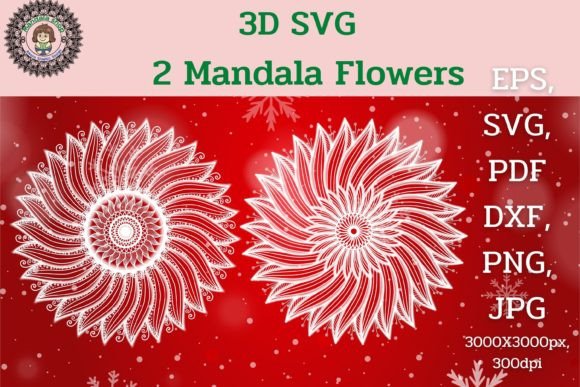
3D SVG 2 Mandala Flowers for Shadow Boxes
First Impressions: Evaluating Mood and Audience Perception
As a brand designer reviewing assets for an upcoming seasonal campaign, my first interaction with the 3D SVG 2 Mandala Flowers was focused entirely on emotional resonance. When opening the zip folder containing this digital clip art collection, the immediate impression is one of intricate warmth and celebratory elegance. Unlike flat vector graphics that can sometimes feel sterile or overly corporate, these mandala designs carry a tactile quality that suggests craftsmanship and intention. For marketers and content creators, this distinction is vital. The visual texture implies a human touch, which is essential when trying to build audience trust in digital spaces.
The mood created by this graphic design asset leans heavily toward festive sophistication. It does not scream "discount bin"; rather, it whispers "celebration." This makes it particularly suitable for lifestyle content, handmade product promotions, and editorial graphics where the goal is to evoke feeling rather than just convey data. For a small business owner launching a Happy New Year or Valentine’s Day offer, this asset bridges the gap between professional polish and personal connection. It feels appropriate for premium visuals without being exclusionary, striking a balance that supports both casual branding and more refined commercial marketing materials.
Strategic Application in Seasonal Product Launches
In a real-world marketing scenario, imagine a creative entrepreneur preparing a comprehensive content kit for a February product launch. The challenge is maintaining visual hierarchy across multiple platforms while keeping the theme consistent. Here is where the 3D SVG 2 Mandala Flowers demonstrate their utility as a versatile design bundle. Because they are structured as a 3D SVG, they offer depth that standard flat illustrations lack, making them ideal for layering in Canva templates or advanced vector software.
For this specific campaign, I utilized the mandalas as anchoring elements in social media graphics. On Instagram, the intricate details served as a frame for product photography, drawing the eye inward toward the central message without overwhelming the text. For Pinterest pins, the vertical orientation of the layered flower design provided necessary height and visual interest, increasing click-through rates. In email banners, the asset acted as a soft transition between the header and the body copy, reducing bounce rates by creating a welcoming aesthetic entry point. The fact that this is a printable design also allowed for seamless integration into physical packaging inserts, ensuring the unboxing experience matched the digital anticipation.
Enhancing Brand Identity and Visual Consistency
Consistency is the backbone of effective brand identity. When integrating the 3D SVG 2 Mandala Flowers into a broader marketing strategy, the asset supports several key business goals. First, it establishes a stronger first impression. In a crowded creative marketplace, generic stock photos often fail to capture attention. These unique mandala flowers provide a distinct visual signature that aids in brand recognition. Second, they improve product presentation. When used as a background element or accent in digital ads, the organic symmetry of the mandala creates a sense of order and calm, which subconsciously signals reliability to potential customers.
Furthermore, this asset facilitates better engagement through emotional connection. Mandalas are universally associated with balance, harmony, and celebration. By leveraging these psychological triggers, marketers can create marketing visuals that resonate on a deeper level than simple typography. For online coaches or digital sellers, using this SVG design in lead magnets or media kits adds perceived value. It transforms a standard PDF into a piece of editorial design, reinforcing the idea that the brand invests in quality at every touchpoint. This attention to detail is what ultimately fosters long-term loyalty and professional credibility.
Optimal Placement for Maximum Marketing Impact
Knowing where to deploy a graphic design asset is just as important as the asset itself. Based on my testing, the 3D SVG 2 Mandala Flowers perform exceptionally well in specific high-visibility areas. They are perfect for hero graphics on landing pages, where the depth of the Shadow Boxes style adds dimension to otherwise flat web layouts. They also excel as decorative brand elements in video thumbnails and webinar slides, providing a polished backdrop that maintains viewer focus.
- Campaign Headers: Use as a central motif to unify Facebook ads, blog posts, and newsletter headers.
- Packaging Accents: Apply to thank-you cards, sticker sheets, or box sleeves to elevate the physical customer experience.
- Branded Templates: Incorporate into reusable social media templates to save time while maintaining aesthetic standards.
- Promotional Banners: Utilize the intricate edges to create natural borders for sale announcements or event flyers.
- Content Bundles: Include as a bonus PNG design or vector file in digital product packages to increase perceived value.
These applications leverage the asset's strengths: complexity, symmetry, and festive adaptability. By placing the mandalas in these strategic locations, brands ensure the design works hard to support conversion goals rather than serving as mere decoration.
Navigating Limitations and Contextual Awareness
While versatile, the 3D SVG 2 Mandala Flowers require careful placement to avoid visual clutter. As a marketer, I must advise against using this asset in formal corporate branding contexts where minimalism and stark professionalism are paramount. The ornate nature of the mandala can clash with rigid corporate identities or dense information layouts. In text-heavy ads or legal disclaimers, the complexity of the design competes with readability, potentially harming the user experience.
Additionally, caution is needed with low-contrast backgrounds. The shadow effects inherent in this 3D SVG rely on contrast to create depth; placing them on dark or busy backgrounds can cause the details to get lost, resulting in a muddy appearance. Small mobile graphics also present a challenge. At reduced sizes, the fine lines of the mandala may blur or pixelate if not optimized correctly. Overly minimal brands should use this asset sparingly, perhaps as a single focal point rather than a repeating pattern, to prevent it from overpowering the clean aesthetic they have cultivated. Always prioritize legibility and message clarity over decorative appeal.
Professional Designer Notes for Commercial Implementation
Before deploying the 3D SVG 2 Mandala Flowers in any paid campaign or client project, rigorous testing is non-negotiable. Start by verifying the commercial license. Ensure the terms allow for the specific intended use, whether that is selling physical products, digital templates, or using the asset in advertising. Next, test the asset against your existing brand color palette. While the raw SVG is flexible, you must ensure the recolored versions maintain sufficient contrast and vibrancy. Check black and white usage specifically; some shadow effects disappear or look harsh when desaturated, so adjust opacity or stroke weights accordingly.
Typography pairing is another critical step. Test the mandala alongside your primary fonts. It typically pairs beautifully with elegant serif fonts for a traditional look or clean sans-serif fonts for a modern twist. Avoid highly decorative script fonts that might fight with the mandala’s own intricacy. Review spacing and balance within real campaign mockups, not just in isolation. Preview designs on mobile screens to confirm that the visual hierarchy holds up at smaller sizes. Finally, compare your compositions against competitor visuals. Does your use of the asset differentiate your brand, or does it look like everyone else’s seasonal post? This level of scrutiny ensures that this creative design asset serves as a powerful tool for professional branding rather than a generic placeholder. By treating this digital product with strategic intent, marketers can unlock its full potential to attract, engage, and convert.