Piggy Favor 3D SVG: Reviewing Shapes for Client Work
First Impressions: Whimsy Meets Structural Design
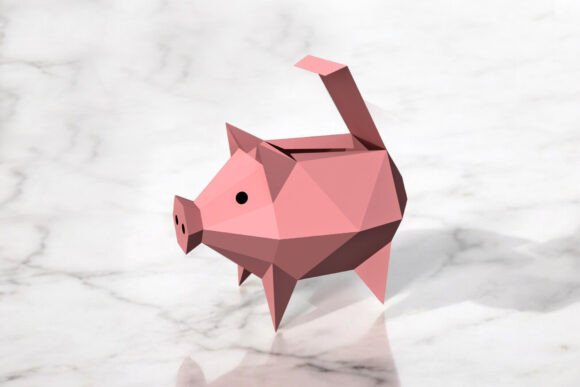
When evaluating a new graphic design asset for a client project, my first question is always about versatility and emotional resonance. Upon reviewing Piggy Favor - 3d Papercraft, the immediate impression is one of tactile warmth and playful geometry. Unlike flat vector illustrations that can sometimes feel sterile in digital spaces, this asset bridges the gap between traditional crafting and modern creative design. The visual mood is distinctly artisanal yet polished, making it an excellent candidate for clients in the handmade business sector, children’s boutique brands, or seasonal marketing campaigns.
From a professional standpoint, the inclusion of multiple file formats—PDF, DXF, EPS, PNG, and JPG—signals that this is a serious digital product intended for cross-platform use. For a designer, having the EPS and DXF files is crucial for scalability in brand identity work, while the PDF serves the printable design market perfectly. The assembled size of 16 x 14 x 20 cm provides substantial physical presence, which translates well when photographed for product mockups or social media content. It does not look like a generic clipart; it looks like a constructed object with depth, shadow, and intention.
Real-World Application: Elevating Boutique Branding
I recently consulted on a visual concept for a small business launching a line of eco-friendly party supplies. They needed a mascot that felt friendly but not infantile, and structural enough to serve as packaging inspiration. Piggy Favor - 3d Papercraft fit this niche precisely. In this real-case scenario, the asset was not just a decoration; it became the anchor for the entire marketing visuals strategy.
We utilized the 3D form to create hero graphics for the website. Because the pig has volume, it allowed us to play with lighting and shadows in our web design layouts, creating a sense of space that flat Shapes often lack. For the physical product line, the papercraft nature of the asset inspired the actual packaging die-cuts. We used the DXF files to prototype box structures that echoed the pig’s geometric folds. This cohesion between the digital illustration and the physical unboxing experience strengthened the brand identity significantly.
Furthermore, for their Etsy shop launch, we leveraged the high-resolution PNG files to create cohesive social media graphics. The transparency allowed us to overlay the pig onto textured paper backgrounds and pastel color blocks without losing edge definition. This flexibility is vital for Etsy product listings where visual consistency builds trust. The asset performed exceptionally well in editorial design for their digital lookbook, serving as a recurring motif that tied together disparate pages without feeling repetitive.
Where This Asset Shines in Commercial Projects
Based on my testing, Piggy Favor - 3d Papercraft excels in specific commercial applications. It is a powerhouse for:
- Hero Graphics and Large Layouts: The 3D volume holds up beautifully at large sizes on posters, flyers, and website headers. It commands attention without needing excessive embellishment.
- Product Mockups and Packaging: Use the rendered views to showcase branding on tags, stickers, or boxes. The dimensional aspect helps clients visualize how their logo will sit on a curved or folded surface.
- Cricut Projects and Physical Crafts: With DXF compatibility, this is a premium SVG design for cutting machines. Crafters can recreate the physical model, making it ideal for selling finished party favors or workshop kits.
- Seasonal Campaign Visuals: Perfect for Lunar New Year, farm-themed events, or savings-focused financial literacy content for kids. The style is specific enough to be thematic but clean enough to remain evergreen.
- Print-on-Demand Merchandise: The high-res JPG and PNG formats are suitable for t-shirt design, tote bags, and mugs, provided the background is managed correctly.
Navigating Limitations: When to Exercise Caution
No design bundle is universal. As a professional, I must highlight where Piggy Favor - 3d Papercraft requires careful handling. Due to its intricate fold lines and 3D shading, it struggles in minimalist corporate environments. If you are designing for a fintech firm or a luxury law practice, this level of whimsy may undermine the perceived professionalism.
Additionally, avoid using this asset at very small sizes, such as favicons or tiny footer logos. The geometric details that make it charming at 16cm will turn into visual noise at 2cm. In crowded layouts with complex backgrounds, the faceted edges can get lost. It demands negative space to breathe. For logo design, treat it as a supporting icon or mascot rather than the primary logotype itself, unless the brand is explicitly craft-focused. Always prioritize visual hierarchy; if the pig competes with essential contact information or call-to-action buttons, scale it back or reposition it.
Impact on Hierarchy, Trust, and Engagement
Incorporating Piggy Favor - 3d Papercraft into a project affects more than just aesthetics; it influences user psychology. The handcrafted aesthetic fosters emotional appeal and approachability. For small business branding, this human touch is often the differentiator against mass-market competitors. It signals that there is a person behind the brand, which enhances visual trust.
However, readability must remain paramount. When placing text near this asset, ensure sufficient contrast. The multifaceted surface creates varying light values, so white text might disappear against a highlighted fold. Use solid color blocks behind typography or position text in the negative space surrounding the figure. This maintains modern design standards while leveraging the asset's charm. Audience engagement tends to be higher with 3D-style assets because they invite curiosity—the viewer wants to understand the structure, leading to longer dwell times on ads and social posts.
Professional Designer Notes: Pre-Flight Checklist
Before deploying Piggy Favor - 3d Papercraft in a paid client project, run through this technical validation process to ensure professional results:
- Verify Commercial Licensing: Always confirm the commercial license terms. Ensure you have the right to use the asset in client deliverables, especially for print-on-demand or digital resale.
- Test Print Quality: Since assembling takes approximately one hour and requires scoring, print a test sheet on your target paper weight. Verify that the fold lines align perfectly before committing to a full production run for a client event.
- Check Vector Editability: Open the EPS/DXF in Illustrator or Affinity Designer. Ensure paths are closed and layers are organized. You may need to adjust stroke widths for cutting machines or recolor specific facets to match a client’s exact Pantone palette.
- Contrast Testing: Place the PNG on both light and dark backgrounds. If the edges blend too much, add a subtle drop shadow or outer glow in Photoshop to separate it from the background.
- Typography Pairing: Test the asset against various font styles. A rounded sans-serif complements the soft geometry, while a handwritten script enhances the DIY feel. Avoid rigid, industrial typefaces that clash with the papercraft aesthetic.
- Mockup Validation: Never present the raw file to a client. Place it in a realistic Canva template or Photoshop mockup to show scale and context. Clients often struggle to visualize how a 3D SVG translates to a flat screen or printed page.
- File Organization: Rename files clearly (e.g., "PiggyFavor_PrintReady_CMYK.pdf") before sending to printers or collaborators. Professional asset management prevents costly errors.
Piggy Favor - 3d Papercraft is a robust tool for the right brief. It offers a unique blend of digital convenience and analog charm that is rare in today’s creative marketplace. By understanding its strengths in branding and its limitations in minimalism, designers can leverage this asset to create memorable, emotionally resonant work that stands out in a saturated market. Whether for a sticker design, a boutique launch, or an interactive workshop, it delivers value far beyond simple decoration.