DIY Car Favor: 3D SVG Review for Paper Toys
First Impressions: Assessing Structural Integrity for Client Events
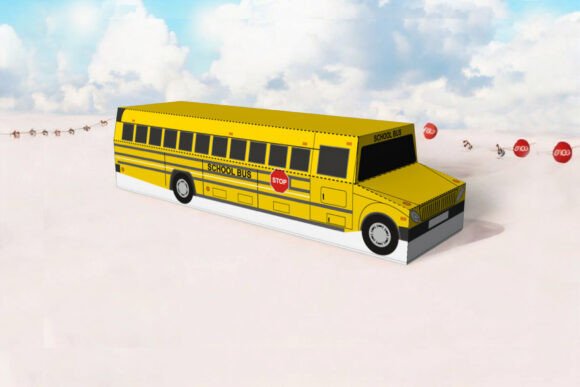
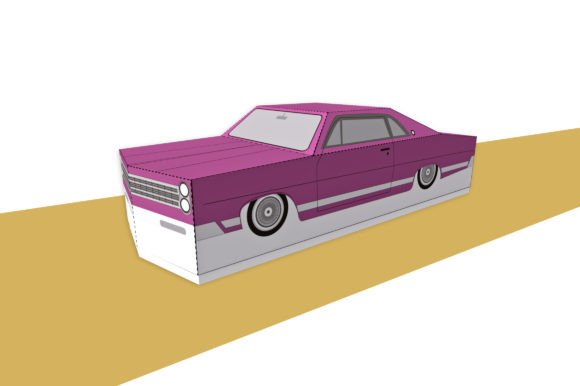
When evaluating a graphic design asset for a client’s experiential marketing campaign or boutique event, the primary concern is always translation. How does a digital file translate into a tangible brand touchpoint? Upon reviewing the DIY Car Favor - 3d Papercraft, my immediate assessment focuses on its viability as a premium takeaway for automotive-themed launches, dealership open houses, or children’s party favors for family-oriented brands. The visual mood is distinctly tactile and interactive, moving beyond flat clipart into the realm of structural paper toys. For a designer, this asset represents an opportunity to bridge the gap between digital invitation and physical memory.
The finished size of approximately 6 x 7 x 20 cms suggests a substantial presence. In a real-world scenario, such as a product launch for a toy line or a promotional giveaway for a local business, this scale allows for significant branding real estate. Unlike standard flat stickers or business cards, this 3D SVG template demands engagement. The one-hour completion time noted in the specifications is a critical metric for UX; it strikes a balance between being a satisfying activity and a frustrating chore. From a creative design perspective, the clean lines implied by the vector format suggest that the folding tabs and glue areas are likely optimized for precision, which is essential when producing these at scale for a corporate event or selling them as finished goods on Etsy.
Strategic Applications in Brand Identity and Packaging Design
In professional practice, the DIY Car Favor - 3d Papercraft serves best as a hero element within a broader brand identity system. I envision utilizing this asset in three specific commercial contexts where traditional graphics fall short.
- Interactive Packaging Design: For small businesses selling automotive accessories or children's books, integrating this papercraft into the unboxing experience adds immense perceived value. It transforms passive packaging into active play.
- Event Marketing Visuals: As a centerpiece for table settings at themed parties or corporate family days, it reinforces the visual theme physically. It works exceptionally well alongside coordinated social media graphics where guests photograph their assembled cars, generating organic user-generated content.
- Digital Product Bundles: For creators selling on creative marketplaces, this asset can be bundled with matching 2D stationery or sublimation designs to create a comprehensive "Car Party" collection, increasing average order value.
The versatility of the SVG design format means it is not limited to paper. Experienced designers can repurpose the vector outlines for laser cutting on cardstock or wood veneer, expanding the utility far beyond the original PDF templates. This adaptability makes it a high-value addition to any design bundle intended for makers and Cricut users who require scalable, editable files rather than static images.
Optimal Placement vs. Visual Hierarchy Risks
While the DIY Car Favor - 3d Papercraft is a robust asset, it requires careful placement to maintain professional standards. It excels in large layout areas where the complexity of the fold lines can be appreciated. Hero graphics on landing pages, detailed instructional blog posts, and physical signage are ideal environments. The asset supports visual hierarchy by acting as a focal point that draws the eye through its geometric intricacy.
However, designers must exercise caution in minimalist or highly technical layouts. This asset should be avoided in small-scale applications like favicon-sized icons or dense text-heavy editorial spreads. The intricate nature of paper toys creates visual noise that can compete with body copy or crucial call-to-action buttons. Furthermore, in strict corporate branding that relies on sleek, futuristic aesthetics, a papercraft aesthetic might inadvertently signal "juvenile" or "low-budget" unless styled with sophisticated photography and premium paper textures. Always ensure the surrounding modern design elements elevate the craft rather than diminishing the brand's authority.
Technical Pre-Flight Checks for Commercial Production
Before committing the DIY Car Favor - 3d Papercraft to a paid client project or a print-on-demand listing, a rigorous technical audit is non-negotiable. A beautiful render does not guarantee a functional build. As professionals, we must validate the following:
- Vector Editability and Layering: Open the 3D SVG in Illustrator or Inkscape. Are the cut lines and score lines separated onto distinct layers? Can you easily change the color palette to match a client’s Pantone references without breaking the geometry? If the file is flattened or rasterized within the SVG container, it fails the test for professional customization.
- Print Calibration and Bleed: Test print on the intended paper weight (likely 160-250gsm). Check if the template accounts for printer margins and bleed. Misaligned fold lines ruin the structural integrity of printable design projects. Verify that the PDF includes clear registration marks.
- Typography Pairing: If adding custom branding to the car body, test various typefaces. A bold sans-serif often reads best on folded surfaces, whereas delicate scripts may get lost in the creases. Ensure the font licensing covers commercial modification.
- Licensing Verification: Scrutinize the commercial license terms. Does it allow for selling the physical assembled item, the digital file, or both? Clarifying this prevents legal exposure for your agency or shop.
- Contrast and Accessibility: Preview the instructions in grayscale. If the fold lines rely solely on color differentiation without dashed/solid line coding, accessibility is compromised. Good design assets function universally.
Evaluating Emotional Resonance and Audience Engagement
Beyond technical specs, the true value of the DIY Car Favor - 3d Papercraft lies in its emotional resonance. In an era of digital fatigue, offering a tactile Cricut project or handmade favor creates a lasting sensory connection. For marketers, this translates to higher recall rates. When a child spends an hour assembling a branded vehicle, or a parent engages in crafting with their family, the brand becomes associated with quality time and creativity.
This emotional capital is particularly valuable for handmade business owners and bloggers. Using this asset in tutorials or as a freebie lead magnet can significantly boost engagement metrics. However, the execution must remain polished. Poorly photographed assembly results or confusing instructions will negate the positive sentiment. As designers, our role is to curate the presentation—ensuring the product mockup looks aspirational yet achievable. We must bridge the gap between the raw template and the finished delight, providing the visual assurance that the end result is worth the effort.
Final Verdict for Professional Integration
The DIY Car Favor - 3d Papercraft is a specialized tool in the creative marketplace. It is not a universal solution for every brief, but for targeted campaigns involving events, children’s products, or interactive packaging, it offers unique advantages that flat graphics cannot replicate. Its success depends entirely on the designer’s ability to respect the medium’s constraints while leveraging its dimensional potential. By validating the SVG design structure, ensuring commercial compliance, and styling it within a cohesive brand identity, this asset can elevate a project from standard promotion to memorable experience. For the discerning designer willing to do the pre-flight work, it is a worthy investment for adding depth to both literal and figurative design portfolios.