Doll House 3D SVG: Shapes for Creative Design
First Impressions: Assessing Visual Warmth and Structural Integrity
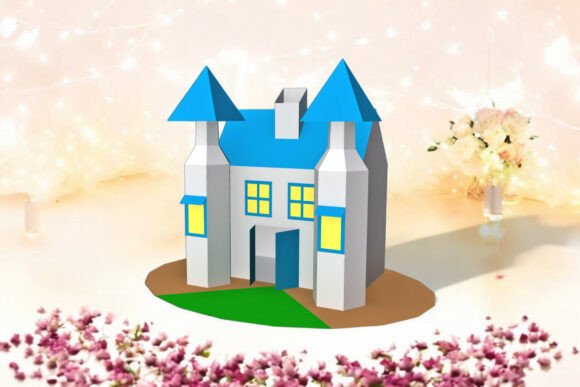
When evaluating a new graphic design asset for a client project, my first criterion is always versatility combined with emotional resonance. Upon reviewing the Doll House - 3d Papercraft files, the immediate impression is one of nostalgic warmth paired with precise geometric structure. This is not merely a flat illustration; it is a dimensional concept that bridges the gap between digital creative design and tangible craftsmanship. For a recent branding project involving a boutique children’s toy line, this asset stood out because it communicates "play" and "safety" simultaneously through its architectural lines.
The visual mood is distinctly artisanal yet clean enough for modern design applications. Unlike chaotic or overly complex clipart, the vector lines in the SVG design files suggest a deliberate, engineered aesthetic. This makes it particularly suitable for clients who want to evoke handmade charm without sacrificing professional polish. The included formats—PDF, DXF, EPS, PNG, and JPG—signal that this digital product was created with multi-platform use in mind, ranging from laser cutting to high-resolution editorial design.
Strategic Application in Brand Identity and Packaging
In the context of small business branding, specifically for a handmade business or an Etsy product launch, the Doll House - 3d Papercraft serves as more than just decoration; it acts as a narrative anchor. During the concept phase for a seasonal campaign, I utilized the EPS vector file to create custom packaging design elements. The ability to scale the shapes without pixelation allowed us to integrate the dollhouse silhouette into box sleeves and tissue paper patterns seamlessly.
For brand identity work, the asset provides a unique alternative to generic iconography. While I would not recommend using the full assembly diagram as a primary logo design due to its complexity, individual components extracted from the design bundle work beautifully as secondary brand marks or watermark elements. The structural nature of the papercraft translates exceptionally well to product mockup overlays, helping potential customers visualize scale and texture before purchasing physical goods. This tactile suggestion increases perceived value in marketing visuals where trust and quality are paramount.
Performance Across Digital and Print Media Channels
A critical test for any commercial design asset is how it performs across varying mediums. In web design and social media graphics, the high-resolution PNG files offer ready-to-use transparency that saves hours of masking work. I found the asset particularly effective for Pinterest pins and Instagram carousels targeting the DIY and crafting niche. The intricate details remain visible even at thumbnail sizes, provided there is adequate negative space around the subject.
For the maker community, the inclusion of DXF files makes this a viable Cricut project or laser cutter resource. However, designers must distinguish between the digital representation and the physical build. The specifications indicate an assembled size of 25 x 35 x 27 cm with an assembling time of approximately two hours. When creating printable design instructions or Canva template tutorials for a client, these metrics are essential for setting accurate user expectations. The asset supports both the visual marketing of the finished house and the instructional design required to sell the pattern itself.
Optimal Placement Versus Contextual Limitations
Understanding where to place this asset is as important as knowing how to edit it. The Doll House - 3d Papercraft excels in large layout areas such as hero banners, poster backgrounds, and t-shirt design centerpieces. Its architectural geometry demands room to breathe. It functions best as a focal point in sticker design or as a textured background element in sublimation design for mugs and tote bags, where the white ink layer can enhance the papercraft illusion.
Conversely, caution is required in minimalist corporate materials or dense informational layouts. Because the design relies on the interplay of lines and folds to convey depth, reducing it to extremely small sizes can cause visual muddiness. It is generally unsuitable for projects requiring strict flatness or ultra-modern abstraction. Furthermore, if your client’s visual hierarchy depends on bold, solid blocks of color, the delicate line work of this 3D SVG might compete rather than complement. Always assess whether the intricate, fold-based aesthetic aligns with the brand's voice before committing it to a commercial license project.
Technical Pre-Flight Checks for Professional Results
Before delivering final assets to a client, rigorous testing is non-negotiable. My standard workflow for this type of design assets includes several verification steps to ensure commercial viability:
- Contrast Testing: Always preview the PNG and SVG on both light and dark backgrounds. Papercraft designs often rely on white or light-colored paper simulation; ensure visibility against dark modes in web design.
- Typography Pairing: Test the asset alongside various font styles. A rounded sans-serif enhances the playful toy aspect, while a refined serif elevates it to heritage editorial design. Avoid overly decorative script fonts that mimic the fold lines, as this creates visual noise.
- Print Verification: If using this for print-on-demand or physical packaging, print a test swatch at actual size. Verify that the smallest tab-and-slot details in the vector file do not fill in with ink or fail to cut on digital die-cutters.
- File Integrity: Inspect the SVG nodes. Clean vectors are essential for editing. Check that the PNG transparency mask is crisp, especially around the outer edges of the house structure.
- Licensing Confirmation: Never assume usage rights. Review the specific commercial license terms regarding resale, modification, and attribution, especially if incorporating the asset into a new digital product or template for sale.
Evaluating Return on Investment for Creative Projects
Ultimately, the decision to use Doll House - 3d Papercraft hinges on efficiency and audience connection. For a designer managing multiple deliverables—from social media graphics to physical packaging—having a cohesive asset that spans digital and physical realms reduces production time significantly. The fact that it arrives with PDF, DXF, EPS, PNG, and JPG formats means you are not paying for five separate assets but one comprehensive solution.
The specified tools—colored printer, glue, scissors, craft knife, scorer, and bone folder—remind us that this asset has roots in physical reality. Leveraging this authenticity in your creative marketplace listings or client presentations adds a layer of credibility that purely digital illustrations often lack. Whether you are designing a brand identity for a nursery, creating engaging content for a craft blog, or developing a new line of printable wall art, this asset offers a balanced combination of technical precision and emotional appeal. By respecting its structural nature and applying it within its optimal visual contexts, designers can transform a simple papercraft file into a cornerstone of sophisticated, multi-channel marketing visuals.