Gun Favour 3D Papercraft: A Designer’s Review
As a professional embroidery designer and product reviewer, I approach every new asset with a critical eye toward its practical application in real-world stitching projects. When evaluating the Gun Favour - 3d Papercraft, my first impression is that this is not merely a digital graphic but a structural blueprint for dimensional creativity. While categorized under Shapes and listed as a 3D SVG type, the deliverable is a PDF intended for physical assembly. For embroidery professionals, Etsy sellers, and makers, this distinction is vital. This file serves as a tangible reference model or a mixed-media foundation rather than a direct stitch file. Understanding how to translate this papercraft aesthetic into a successful machine embroidery design or complementary handmade product requires careful planning and technical foresight.
Translating Paper Geometry to Stitched Texture
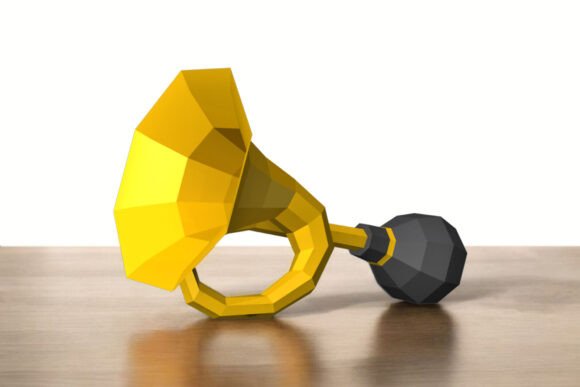
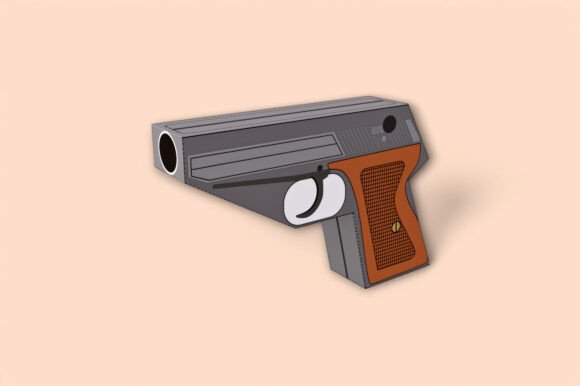
The visual personality of Gun Favour - 3d Papercraft is defined by clean lines, geometric precision, and a distinct low-poly aesthetic. In a real-life scenario, imagine you are preparing a custom embroidered tote bag or a boutique sweatshirt for a client who wants an edgy, modern accessory. The assembled size of 10 x 4 x 16cm provides a perfect scale reference for placement. However, because this is originally a paper craft template, converting it into an applique design or dense fill stitch requires interpreting paper folds as fabric layers.
When I visualize this on a finished product, such as a personalized gift box packaging or a decorative patch, the sharp angles suggest using a crisp satin stitch border to define edges. If you are creating a mixed-media project where the actual paper craft is attached to a textile base, the 30-minute assembling time makes it a feasible add-on for premium packaging. For pure embroidery applications, the challenge lies in replicating the shadow and depth of folded paper using thread. You might need to utilize varying stitch density or directional fill stitch patterns to mimic the faceted look of the 3D form without making the design too heavy for the fabric.
Best Applications for Creative Entrepreneurs
For small business owners and creative entrepreneurs, versatility is key. Gun Favour - 3d Papercraft excels in specific niches where structure and novelty are valued over traditional softness. I see strong potential for this design in the following areas:
- Boutique Branding and Packaging: Use the assembled papercraft as a unique tag or favor attached to custom apparel or holiday embroidery orders. It elevates the unboxing experience significantly.
- Modern Decorative Patches: Translate the geometric shapes into an embroidered patch for caps or backpacks. The angular nature suits sturdy fabrics like canvas or denim perfectly.
- Digital Product Mockups: As a 3D SVG/PDF asset, it can be used to create realistic printable mockup scenes for your shop listings, helping customers visualize scale before they buy.
- Mixed-Media Art: Combine the paper element with running stitch outlines on a pillow cover or wall hanging for a textural contrast that stands out at craft fairs.
In these contexts, the design adds perceived value. Customers trust brands that show attention to detail, and a well-executed 3D element signals professionalism and high-effort craftsmanship.
Technical Cautions and Fabric Compatibility
Despite its appeal, Gun Favour - 3d Papercraft presents challenges that must be managed carefully. The geometric rigidity that looks great in paper can be unforgiving in embroidery. If you are adapting this shape for stitching, be wary of using it on stretchy fabrics like jersey knits without exceptional stabilization. The sharp corners and straight lines require precise tension; any puckering will distort the intended 3D illusion immediately.
I would also advise caution when working with dark fabrics. The depth cues in this design rely heavily on light and shadow. On black or navy material, those subtle facets may disappear unless you use high-contrast thread colors or metallic threads to catch the light. Additionally, consider the end-use. If this is for a baby item or kitchen towel that requires frequent washing, the intricate points typical of papercraft styles may fray over time. In such cases, simplifying the outline or enclosing the design in a border is a smarter choice for longevity. Always verify your hoop size against the 10 x 4 x 16cm dimensions to ensure the proportions remain accurate during digitizing or assembly.
Essential Workflow Notes for Makers
Before listing any product featuring Gun Favour - 3d Papercraft, run through a rigorous testing protocol. Since the provided file is a PDF for assembly and not a pre-digitized digital embroidery file, you must confirm licensing terms regarding commercial use of derivative works. Are you allowed to sell items made from this shape? Can you sell the digitized version? Clarity here protects your craft business.
Practically speaking, always test the design on scrap fabric first. Check whether the paper assembly holds up when glued to textile surfaces, or if the digitized version maintains its structural integrity after washing. Review stabilizer choices meticulously; a cutaway stabilizer is often necessary for maintaining the sharp geometry on apparel, while tear-away might suffice for the paper craft attachment points. Compare light and dark background tests to ensure the visual impact remains consistent across different product variations.
Elevating Product Value Through Dimensional Design
Ultimately, Gun Favour - 3d Papercraft offers a unique opportunity to break away from flat, standard embroidery. Whether used as a literal paper favor accompanying a purchase or reimagined as a complex sweatshirt embroidery motif, it brings a sculptural quality that attracts buyers looking for something different. For the experienced maker, the value lies not just in the file itself, but in the thoughtful execution of its translation from screen to physical object.
Remember that what you receive includes the PDF and requires specific tools like a scorer, bone folder, and craft knife. This implies a hands-on construction process. Integrating this manual craft element with automated machine embroidery creates a hybrid handmade product that justifies higher price points. By respecting the technical constraints and leveraging the bold aesthetic, you can turn this digital asset into a signature element of your brand identity, ensuring both customer satisfaction and creative fulfillment.